
The Complete Guide to Living in Leelanau County
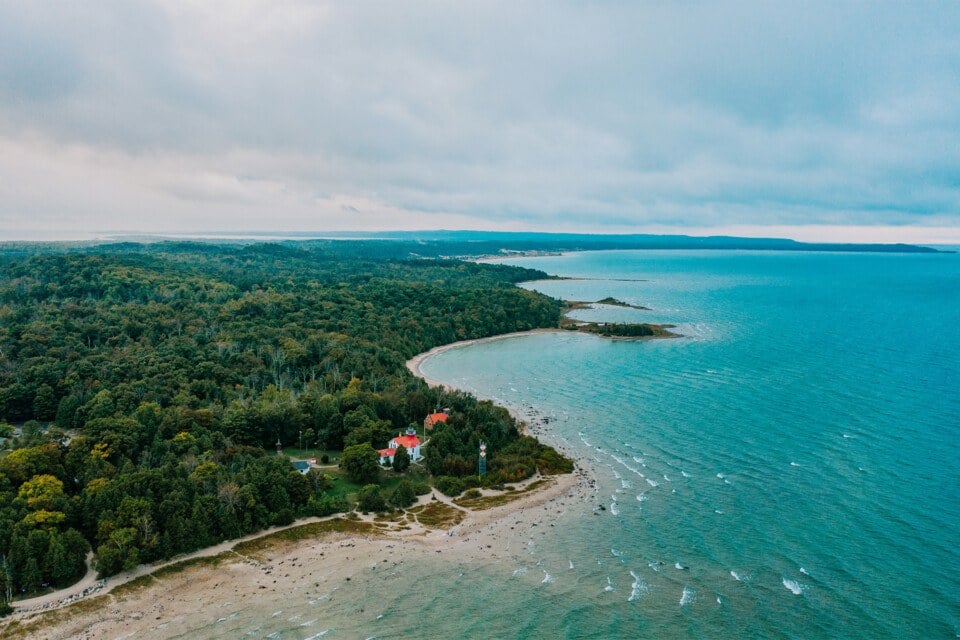
Leelanau County is the pinky finger of Michigan's mitten, a peninsula that reaches into Lake Michigan north and west of Traverse City. It is quieter than the city, more rural than Old Mission, and for a certain kind of buyer it is the most beautiful place in the state to own a home. Vineyards run down to the water. Two-lane roads curve through orchards and farmland. The Sleeping Bear Dunes rise five hundred feet off the shoreline. Small villages, each with its own character, sit a short drive from one another and about half an hour from downtown Traverse City.
This is the complete guide to living in Leelanau County: the villages, the housing market, the schools, the drive times, and the things you need to know before you buy here. If you are considering a move to Northern Michigan or a second home on the Leelanau Peninsula, this is the conversation we have with clients before they start looking.
Where Leelanau County is, and why that matters
Leelanau County occupies the whole of the Leelanau Peninsula. Lake Michigan forms its western and northern shore. Grand Traverse Bay forms its eastern shore, the side that faces Traverse City and Old Mission Peninsula across the water. That geography is the first thing to understand, because it shapes everything about how the county lives and what property costs.
The county is almost entirely rural. There is no highway running through it and no big-box commercial corridor. What there is instead is a string of villages, farmland protected in large part by conservation work, national lakeshore along the western edge, and one of the most established wine regions in the Midwest. The nearest full-service city, with its hospital, airport, and shopping, is Traverse City, which sits just off the base of the peninsula.
For buyers, that rural character is the whole appeal and also the main tradeoff. You trade convenience for space, water, and quiet. Understanding which village you are in, and how far it sits from town, is most of the decision.
The villages of Leelanau County
Leelanau is not one market. It is a collection of small communities, each with a different feel, price point, and daily rhythm. Here is how they break down.
Suttons Bay
Suttons Bay is the most walkable village in the county and the one most people picture when they imagine village life on the peninsula. It sits on Grand Traverse Bay, a straight twenty-minute drive up M-22 from Traverse City, which makes it the easiest Leelanau community for a year-round commuter. The downtown has restaurants, a marina, galleries, and a genuine main street. Housing ranges from in-village homes and cottages to bay-front property and homes on the hills above town with water views. For buyers who want Leelanau scenery without giving up walkability or a manageable drive to work, Suttons Bay is usually the first place we point them.
Lake Leelanau
Lake Leelanau, both the village and the lake it sits on, is central to the peninsula. The lake itself is one of the county's largest and most desirable inland waters, split into a north and south arm and popular for boating, fishing, and swimming. The village is small and practical. Buyers here are often after lake frontage on Lake Leelanau, which carries a premium, or a home within easy reach of both the lake and the wineries that surround it.
Leland and Fishtown
Leland is the county seat and home to Fishtown, the historic collection of weathered fishing shanties, docks, and smokehouses on the Leland River that has become one of the most photographed places in Northern Michigan. Leland sits on Lake Michigan and offers some of the county's most coveted, and most expensive, waterfront. It is also the departure point for the ferry to North and South Manitou Islands. Homes range from in-town cottages near Fishtown to significant Lake Michigan estates. Leland is scenery, history, and prestige in one village.
Northport
Northport sits near the very tip of the peninsula, where Grand Traverse Bay meets Lake Michigan. It is farther from Traverse City, roughly forty-five minutes, and that distance keeps it quieter and often more affordable than the villages closer to town. Northport rewards buyers who want a true small-town harbor community, a marina, and access to the Grand Traverse Lighthouse and Leelanau State Park at the point. For remote workers and retirees who do not need to be in town daily, Northport is one of the county's best values.
Glen Arbor and the Sleeping Bear gateway
Glen Arbor sits on the western side of the county, surrounded almost entirely by Sleeping Bear Dunes National Lakeshore, between Glen Lake and Lake Michigan. It is the resort heart of Leelanau: beaches, dune access, the Homestead resort, kayaking on the Crystal River, and some of the most dramatic scenery in the state. Property here commands a premium, especially frontage on Glen Lake, which is regularly ranked among the most beautiful lakes in the country. Glen Arbor is a strong second-home and vacation-rental market, and a spectacular place to own if the western dunes are what drew you north.
Empire
Empire is the small village at the southern gateway to Sleeping Bear Dunes, home to the national lakeshore headquarters and the beloved Empire Bluff and Dune Climb nearby. It is unpretentious, close to the beaches, and appeals to buyers who want proximity to the dunes without Glen Arbor pricing.
Cedar, Maple City, and the interior
Not all of Leelanau is waterfront. The county's interior, around Cedar, Maple City, and the farmland between the villages, is where you find the more attainable homes: farmhouses, acreage, newer builds, and orchards. Cedar has a strong Polish heritage and a genuine local community. For buyers who want land, a bit more house for the money, and a central position between the wineries and the dunes, the interior is worth a serious look.
Omena and Peshawbestown
Between Suttons Bay and Northport, the small communities of Omena and Peshawbestown line the bay. Omena is a tiny, historic waterfront hamlet. Peshawbestown is home to the Grand Traverse Band of Ottawa and Chippewa Indians and the Leelanau Sands Casino. This stretch of M-22 offers bay frontage and quiet, with easy access to the wineries just inland.
The Leelanau housing market: what to expect
Leelanau County is a premium market, and it is a varied one. Prices are driven less by square footage than by three things: water, view, and proximity to a village. A modest cottage with Lake Michigan frontage in Leland or Glen Lake frontage in Glen Arbor can command far more than a large home on interior acreage in Cedar. That is the single most important thing to understand about pricing here.
Broadly, the market breaks into tiers. The interior of the county, around Cedar, Maple City, and the farmland, offers the most attainable entry points, including farmhouses and homes on acreage. Village homes in walkable Suttons Bay and Leland sit higher. Water access and water views push prices up from there. And true frontage, on Lake Michigan, Glen Lake, Lake Leelanau, or Grand Traverse Bay, sits at the top of the market and can reach into the multiple millions for the best properties.
Inventory is limited. Leelanau is a small county with a fixed amount of shoreline and a great deal of protected land, which keeps supply tight and holds value well over time. Because pricing moves with the season and the specific property, the numbers in any general guide go stale quickly. For current figures, the honest move is to look at what is actively on the market and recently sold in the specific village you are considering. The Ted Schweitzer Group publishes a Leelanau County market report on a regular cadence, and we are always happy to pull live comparables for a particular area.
Water and waterfront in Leelanau
Water is why most people buy here, and the county offers several very different kinds of it.
Lake Michigan frontage is the marquee category: big water, sunsets, and the shoreline around Leland, Glen Arbor, and Empire. It is the most dramatic and the most expensive, and it comes with real considerations around bluffs, erosion, and water levels that every buyer should understand before falling in love with a view.
Grand Traverse Bay frontage, on the eastern side around Suttons Bay, Omena, and Northport, is calmer, often warmer for swimming, and faces the lights of Old Mission and Traverse City across the water. It tends to be the choice for buyers who want swimmable, boatable frontage with an easier drive to town.
Inland lake frontage on Lake Leelanau and Glen Lake is highly sought after. Glen Lake in particular is famous for its clarity and color. Inland-lake living offers protected water for boating and swimming without the exposure of the big lake.
If waterfront is your goal, the type of water, the quality of the frontage, the bottom, and the winter and water-level dynamics matter as much as the house. This is where working with an agent who knows the specific stretch of shoreline earns its keep.
Sleeping Bear Dunes National Lakeshore
Much of western Leelanau is protected within Sleeping Bear Dunes National Lakeshore, repeatedly named one of the most beautiful places in America. For residents, the lakeshore is a permanent, protected backyard: towering dunes, empty Lake Michigan beaches, the Pierce Stocking Scenic Drive, the Dune Climb, miles of hiking and the Sleeping Bear Heritage Trail, and the Manitou Islands offshore.
For buyers, the national lakeshore does two things. It guarantees that the scenery around Glen Arbor and Empire will never be developed, which protects both quality of life and property value. And it constrains supply, because a large share of the county's most beautiful land is public and will never come to market. That scarcity is a big part of why Leelanau holds value.
Wine country: the Leelanau Peninsula AVA
Leelanau is one of Michigan's two established wine regions, an officially designated American Viticultural Area with dozens of wineries and tasting rooms scattered across the peninsula. The Leelanau Peninsula Wine Trail is a genuine draw, and living among the vineyards is a real part of the appeal here, not just a marketing line. The peninsula is known for cool-climate whites, sparkling wine, and increasingly serious reds, and the tasting rooms anchor much of the county's social and tourism life from spring through the harvest season.
For buyers, wine country means two things worth naming. Vineyard views and proximity to the trail add to a property's appeal and value. And the harvest season, roughly September into October, is one of the most beautiful and busiest times to be on the peninsula, which is worth keeping in mind whether you are buying for lifestyle or considering short-term rental income.
Schools in Leelanau County
Leelanau is served by several small, well-regarded public districts, and school district is a meaningful factor in where families choose to buy.
Glen Lake Community Schools, serving the Glen Arbor, Empire, and Maple City area, has one of the strongest reputations in the region and is a genuine draw for families. Suttons Bay Public Schools is small and well regarded, serving the Suttons Bay area. Leland Public School is a small K through 12 serving the Leland area. Northport Public School is a tiny, beloved K through 12 at the tip of the peninsula. Because the districts are small, boundaries matter, and the district a given home falls in can shape both family fit and resale. We are glad to confirm the district for any specific address.
Getting around: drive times and the airport
Leelanau has no highway, and daily life runs on M-22, the scenic two-lane that loops the peninsula, along with M-204 and county roads. Drive times to Traverse City, where the hospital, airport, and larger shopping sit, are the practical heart of the decision:
- Suttons Bay to Traverse City: about 20 minutes
- Lake Leelanau to Traverse City: about 25 minutes
- Leland to Traverse City: about 30 minutes
- Glen Arbor to Traverse City: about 40 minutes
- Northport to Traverse City: about 45 minutes
Cherry Capital Airport in Traverse City handles regional and connecting flights and is the county's link to the rest of the country. For buyers coming from a city, the rhythm is different here: you plan your trips into town, you keep a full pantry, and the drive along the water is part of what you are buying.
The four seasons in Leelanau
Summer is the county at its most alive: beaches, boats, wineries, farm stands, and long light off the water. Fall is arguably the best season, with the wine harvest and some of the most spectacular color in the state as the peninsula's hills and orchards turn. Winter is quiet and real. Snow comes off Lake Michigan, some seasonal businesses close, and the county empties of tourists, which many year-round residents consider the reward for living here. Spring is mud season followed by blossom season, when the cherry and apple orchards bloom across the peninsula.
Anyone considering a move should understand the seasonal swing. Leelanau in July and Leelanau in February are two different places. If you can, visit off-season before you buy. The people who are happiest here love the quiet winters, not just the summers.
What to know before you buy in Leelanau
A few practical things separate a smooth purchase from a surprise.
Short-term rental rules vary by township and are evolving. Leelanau County is governed at the township level, and regulations on vacation rentals differ from one township to the next and continue to change. If rental income is part of your plan, confirm the current rules for the specific township before you buy. Do not assume a neighboring property's rental history still applies.
Many homes are on well and septic. Outside the villages, most properties have private wells and septic systems rather than municipal utilities. These deserve careful inspection, especially on older cottages.
Winter access matters. Some roads and some waterfront properties are more difficult to reach or maintain in winter. If you intend to live here year-round, ask about plowing, road maintenance, and access before you commit.
Conservation and land protection are part of the landscape. The Leelanau Conservancy and other efforts have protected a great deal of land in the county, which is a major reason the scenery endures and values hold. Some parcels carry conservation easements that affect what can be built. It is worth understanding any restrictions on a property you are serious about.
Seasonal versus year-round. Decide honestly which you are. A summer cottage and a year-round home are different purchases, with different requirements for heating, insulation, access, and location.
Who Leelanau County is right for
Leelanau is right for the buyer who wants water, scenery, and quiet, and is willing to trade some convenience for it. It suits second-home buyers, retirees, remote workers, and families drawn to strong small schools and a rural pace. It is one of the most beautiful places to own property in Michigan, and its combination of protected land and limited shoreline has made it a market that holds value well.
It is less suited to someone who needs to be minutes from a hospital, an office, or a grocery store every day, or who wants an urban, walk-everywhere lifestyle year-round. For that buyer, Traverse City or Old Mission Peninsula may fit better, and we are glad to help you compare.
Frequently asked questions about living in Leelanau County
Is Leelanau County a good place to live year-round? Yes, for the right person. Year-round residents love the quiet winters, the small schools, and the scenery. The tradeoff is distance from city services and a real seasonal swing in activity. Visiting in the off-season is the best way to know if it fits you.
How far is Leelanau County from Traverse City? It depends on the village. Suttons Bay is about 20 minutes from downtown Traverse City, Leland about 30, and Northport about 45. Traverse City is where you will find the hospital, the airport, and larger shopping.
Where is the most affordable place to buy in Leelanau County? The county's interior, around Cedar and Maple City, and the community of Northport near the tip, generally offer the most attainable entry points. True waterfront in Leland, Glen Arbor, and on the inland lakes sits at the top of the market.
Can you rent out a home in Leelanau County as a short-term rental? Sometimes, but it depends. Short-term rental rules are set at the township level and vary across the county, and they continue to change. Always confirm the current rules for the specific township before buying with rental income in mind.
What are the best schools in Leelanau County? Glen Lake Community Schools has one of the strongest reputations in the region. Suttons Bay, Leland, and Northport all run small, well-regarded public districts. Because the districts are small, the district a home falls in is worth confirming.
Thinking about a move to Leelanau County?
Leelanau is a small county with a lot of variety, and the right village for you depends on how you want to live, how often you need to be in town, and what kind of water you are after. That is exactly the conversation the Ted Schweitzer Group has with buyers before they start looking.
We live and sell across Leelanau County, Old Mission Peninsula, and the greater Traverse City area, and we would be glad to help you find the right corner of the peninsula. Reach out to start the conversation, or browse our current Leelanau County listings to see what is on the market now.
The Ted Schweitzer Group is a real estate team with @properties Christie's International Real Estate, serving Traverse City, Old Mission Peninsula, Leelanau County, and the greater Northern Michigan market.
Check out this article next