

The Complete Guide to Living on Old Mission Peninsula
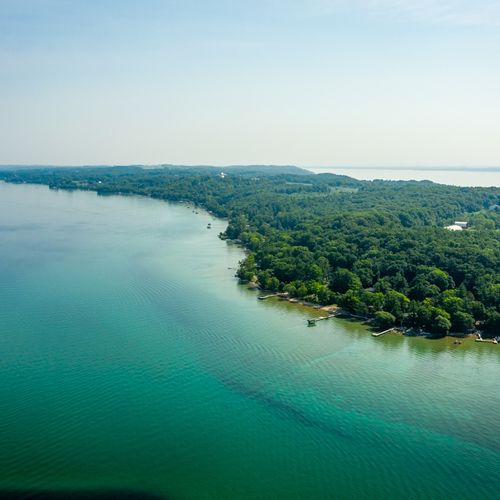
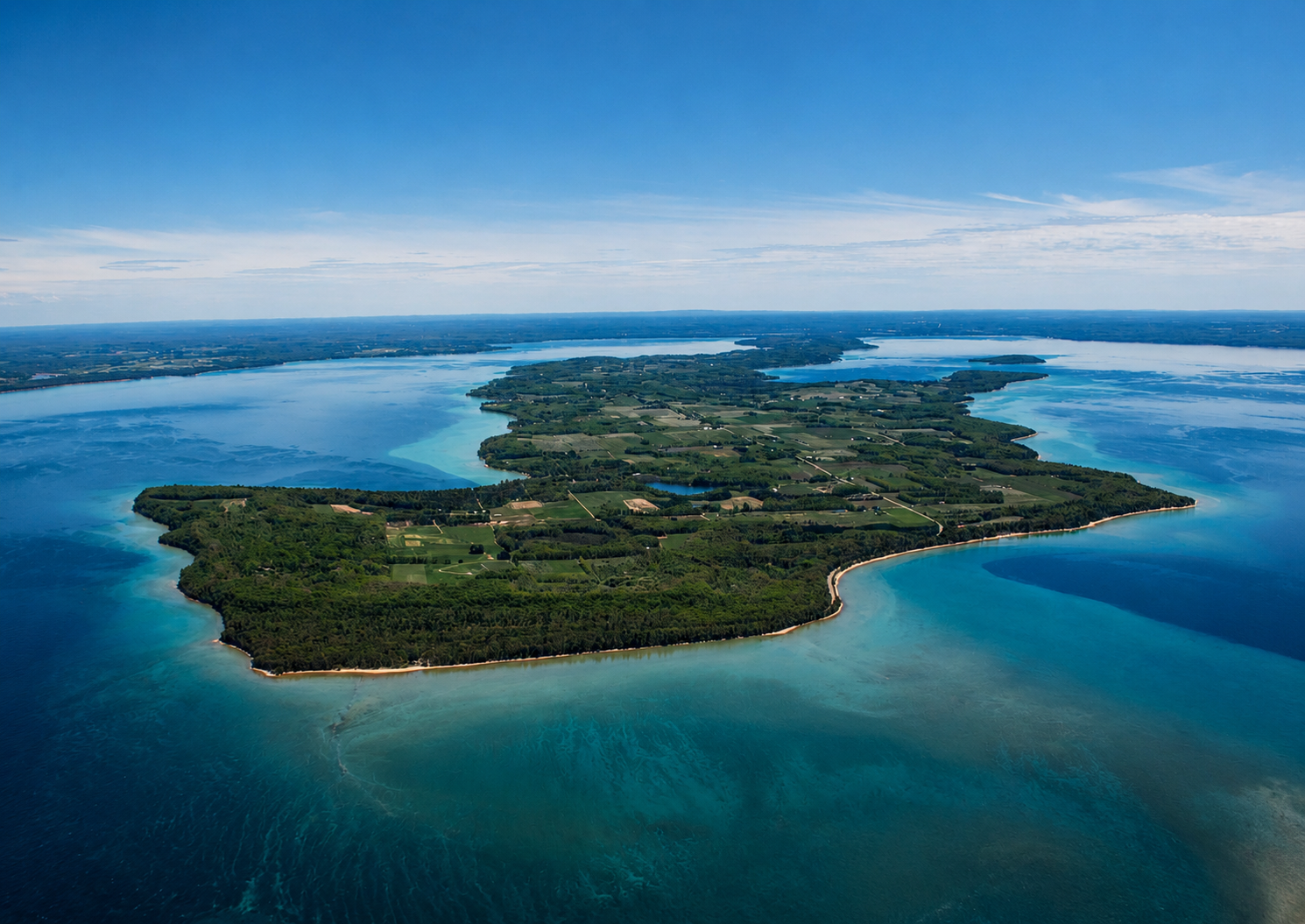
Old Mission Peninsula is one of the most distinctive places to live in Northern Michigan. It is a narrow ribbon of land, roughly eighteen miles long and never more than three miles wide, that runs straight up the middle of Grand Traverse Bay and splits it into an East arm and a West arm. Water is almost always in view. Vineyards and cherry orchards cover the hills. Downtown Traverse City sits just off the base of the peninsula, close enough for dinner and a show, far enough that the pace up here stays quiet.
We work this market every day, and we wrote this guide to give you the full picture of what it means to live on Old Mission Peninsula. Not a highlight reel. The real thing, from the housing market to the school to where you buy your morning coffee.
Where Old Mission Peninsula Is
The peninsula begins at the northern edge of Traverse City and extends north into Grand Traverse Bay. The entire peninsula sits within Peninsula Township in Grand Traverse County. One main road, M-37 (locally known as Center Road), runs up the spine, with Peninsula Drive and Bluff Road tracing the shorelines.
Distance to town depends on where you land. The southern end of the peninsula is five to ten minutes from downtown Traverse City. The very tip is closer to twenty minutes. Either way, you are never far from groceries, restaurants, the hospital, or Cherry Capital Airport.
There is one more piece of geography worth knowing. Old Mission Peninsula sits on the 45th parallel, the line halfway between the Equator and the North Pole. That latitude puts it in the same band as celebrated wine regions in France and Italy, and it is a big part of why the land here grows what it does.
The Old Mission Peninsula Real Estate Market
If you take one thing from this guide, take this: the defining feature of the Old Mission Peninsula real estate market is scarcity. The land is finite. Eighteen miles long, three miles wide, bay on both sides, and no room to sprawl. That geography is not going to change, and it shapes everything about buying here.
In recent market data, the median sale price on the peninsula has held around $815,000. That is roughly three times the statewide Michigan median. Inventory stays tight, often fewer than one hundred active listings across the entire peninsula at any given time, which means well-priced homes in good locations move.
The market spans a wide range:
- Condominiums and inland homes. The most attainable entry point on the peninsula. Condos and smaller inland properties can start in the low-to-mid $300,000s.
- Vineyard-view and hillside homes. Homes set back from the water with views over the orchards and the bay make up much of the mid-market.
- Waterfront homes and estates. Frontage on East Bay or West Bay carries a clear premium. Waterfront properties frequently run between $1 million and $3 million.
- Trophy properties. A handful of estates with significant frontage and acreage reach well past $5 million.
Homes here tend to spend about two months on the market on average, though the picture varies. Move-in-ready homes in strong locations go faster. Ultra-luxury bayside estates can take longer, simply because the pool of buyers at that level is smaller.
Old Mission Peninsula has proven to be one of Northern Michigan's most resilient markets. Families, remote workers, retirees, and second-home buyers all compete for the same limited supply, and that steady demand is a direct result of how special and how limited this place is.
What It Is Actually Like to Live Here
Life on the peninsula follows the seasons closely.
Summer is the peak. The bays warm up enough to swim, the tasting rooms fill, and the roadside farm stands overflow with cherries, then peaches, then apples. Sunsets over West Bay are a nightly event.
Fall is many locals' favorite. Harvest season brings color to the vineyards, the crowds thin, and the light turns golden across the hills. Winter is genuinely quiet. Snow settles over the dormant vines, and the peninsula returns to the people who live here year round. Spring arrives slowly and beautifully, with blossom season turning the orchards white and pink.
This is a rural, residential place. There is no downtown strip on the peninsula itself, and that is by design and by zoning. Most everyday shopping happens in Traverse City, minutes away. What the peninsula offers instead is space, water, working farmland, and a strong sense of community.
Old Mission Peninsula Wine Country
Old Mission Peninsula is a federally recognized American Viticultural Area, and wine is woven into daily life here. The Old Mission Peninsula Wine Trail is made up of about ten wineries, each with its own character, most within a short drive of one another along Center Road.
The cool-climate conditions favor crisp whites, and the region is especially known for Riesling, Pinot Gris, Chardonnay, and Gewurztraminer, along with cool-climate reds like Pinot Noir and Cabernet Franc. Lake effect from the surrounding bay moderates the temperature and helps protect the vines from spring and fall frost.
A few of the wineries you will get to know as a resident:
- Chateau Grand Traverse. The original winery on the peninsula and a Michigan Riesling benchmark.
- Chateau Chantal. A French-style chateau that doubles as an inn, with sweeping views from the ridge.
- Mari Vineyards. A hillside estate known for its underground wine caves and Italian-leaning reds.
- Brys Estate. Home to the Secret Garden, a fragrant lavender labyrinth that draws visitors every July.
- Bowers Harbor Vineyards. A relaxed, dog-friendly tasting room and patio overlooking the harbor.
- Bonobo Winery. A modern room with wide views over West Bay.
- 2 Lads Winery. Contemporary architecture and East Bay views, with a reputation for sparkling wine and Cabernet Franc.
- Peninsula Cellars. A family-run, award-winning winery beloved by locals.
Living here means the wine trail is not a special-occasion trip. It is a Sunday afternoon, a place to bring visiting family, and a set of neighbors who happen to make excellent wine.
Farms, Orchards, and Food
Old Mission Peninsula is cherry country. The Traverse City region is famous for it, and the peninsula's orchards are a big reason why. Through the summer and fall, roadside stands sell cherries, then stone fruit, then apples and cider, often on the honor system.
At the heart of the peninsula village sits the Old Mission General Store, a working general store that dates to the mid-1800s and ranks among the oldest in the state. It is part deli, part sandwich counter, part penny-candy time capsule, and it functions as a genuine community gathering point.
For groceries, dining, and everything else, downtown Traverse City is minutes from most points on the peninsula, giving you a rare combination: farm-stand living with a full small city just off the peninsula's base.
Beaches, Parks, and the Outdoors
For a place this narrow, the peninsula is rich in public land and shoreline.
At the northern tip, the Mission Point Lighthouse stands on the 45th parallel. Built in 1870 and decommissioned in 1933, it reopened as a museum and is owned and maintained by Peninsula Township. In season, you can climb the tower for a wide view of the bay, and the township even runs a keeper program that lets people stay on site. The grounds, beach, and trails stay open year round.
Around the lighthouse, Lighthouse Park and the adjoining Old Mission Point Park combine for hundreds of acres of forest and former orchard, laced with close to ten miles of hiking trails. This is a favorite for walking, trail running, snowshoeing in winter, and rock hunting along the shore.
For swimming and family beach days, Haserot Beach is a longtime local pick, with calm shallow water and a playground. Other public shoreline access points and small parks are scattered along both bays, and boaters have easy access to Grand Traverse Bay from several points on the peninsula.
Schools on Old Mission Peninsula
Families on the peninsula are served by the Old Mission Peninsula School, a public charter school for the youngest grades, located about halfway up the peninsula on a fifteen-acre campus surrounded by orchards and vineyards. It is a small school with low student-to-teacher ratios and a curriculum built around outdoor, place-based learning, from a frog pond and garden beds to snowshoeing in winter. It consistently tests among the stronger elementary schools in the state.
Beyond the elementary years, the peninsula falls within the Traverse City Area Public Schools district, which includes Traverse City Central and West high schools. A number of private and specialty school options are also available in the greater Traverse City area, all within a reasonable drive.
Getting Around and Everyday Essentials
The peninsula is car-dependent. There is one main road up and down, and daily life assumes a vehicle. The upside is how close everything is once you reach the base: full-service grocery, healthcare, dining, shopping, and Cherry Capital Airport for regional and connecting flights.
Practical ownership details differ from in-town living. Many peninsula properties are on private wells and septic systems rather than municipal utilities, and Peninsula Township maintains its own zoning, including agricultural and land-preservation measures that help keep the peninsula rural. These are exactly the kinds of specifics worth understanding before you buy, and we walk every client through them.
Who Old Mission Peninsula Is For
The peninsula suits a few kinds of buyers particularly well:
- Families drawn to the small school, the safety, and the room to roam.
- Remote workers who want beauty and quiet with a real city minutes away.
- Retirees looking for a walkable-to-the-water lifestyle and a strong community.
- Second-home and seasonal buyers who want a Northern Michigan base near the wine trail and the bays.
What unites them is a preference for place over convenience-store proximity. If you want a strip mall around the corner, the peninsula is not it. If you want vineyards, water, orchards, and a genuine sense of belonging, there are few places like it anywhere.
Buying on Old Mission Peninsula: What to Know
A few things set peninsula transactions apart from a standard in-town purchase:
- Frontage matters. On waterfront properties, the amount and quality of bay frontage, the type of shoreline, and dock access drive value as much as the house itself. East Bay and West Bay each have their own feel and their own market.
- Location on the peninsula shapes price and lifestyle. Southern-end properties trade proximity to town, while properties toward the tip trade seclusion. Neither is better. They are different, and the right answer depends on how you plan to live.
- Inventory is limited, so preparation pays. With a small number of listings at any time, buyers who are financially ready and clear on their priorities are best positioned when the right home appears.
- The details are local. Wells, septic, zoning, private roads, and agricultural land can all factor in. This is where working with someone who knows the peninsula street by street makes a real difference.
Frequently Asked Questions
How much do homes cost on Old Mission Peninsula? Recent median sale prices have held around $815,000, with condos and inland homes starting in the low-to-mid $300,000s and waterfront estates commonly running from $1 million to well over $3 million.
How far is Old Mission Peninsula from downtown Traverse City? Five to ten minutes from the southern end, and about twenty minutes from the tip. The base of the peninsula meets the northern edge of Traverse City.
Is Old Mission Peninsula a good place to live year round? Yes. It is a quiet, close-knit, largely owner-occupied community. Summer and fall are lively with visitors and harvest, while winter is peaceful and settled.
What schools serve Old Mission Peninsula? The Old Mission Peninsula School serves the youngest grades on the peninsula itself, and the area falls within the Traverse City Area Public Schools district for the older grades.
How many wineries are on Old Mission Peninsula? About ten wineries make up the Old Mission Peninsula Wine Trail, all within a short drive along Center Road, in one of the country's recognized American Viticultural Areas.
Why are homes on Old Mission Peninsula so limited? The peninsula is only eighteen miles long and three miles wide, bounded by water on both sides and largely protected from development by township zoning. That permanent scarcity keeps inventory low and demand steady.
Considering a Move to the Peninsula?
Old Mission Peninsula rewards people who know it well, and knowing it well is our work. If you are weighing a move, curious about a specific stretch of shoreline, or simply want to understand the market before you decide anything, the door is open. Reach out to our team whenever you are ready, and we will give you the same honest, local read we would give a neighbor.
Check out this article next