

Moving to Traverse City is a decision a lot of people make twice. First on vacation, standing on a beach on Grand Traverse Bay in July. Then again, more seriously, when they start asking what life here actually looks like in February.
This guide answers that second question. Cost of living, the housing market, neighborhoods, schools, winters, jobs, and the practical details most relocation guides leave out. It is written by the Ted Schweitzer Group, a Traverse City real estate team at @properties Christie's International Real Estate, for anyone seriously considering a move to Northern Michigan.
In this guide:
- Why people are moving to Traverse City
- Where Traverse City is and how you get here
- Traverse City cost of living and the housing market
- Traverse City neighborhoods and nearby towns
- Weather and the four seasons
- Jobs, the economy, and remote work
- Schools and education
- Healthcare
- Things to do year-round
- Practical details before you buy
- Pros and cons of living in Traverse City
- Frequently asked questions
Why People Are Moving to Traverse City
Traverse City sits at the southern tip of Grand Traverse Bay, on the 45th parallel, in the northwest corner of Michigan's Lower Peninsula. The city itself is small, roughly 15,800 people. Grand Traverse County is close to 97,000, and the four-county metro area is around 157,000.
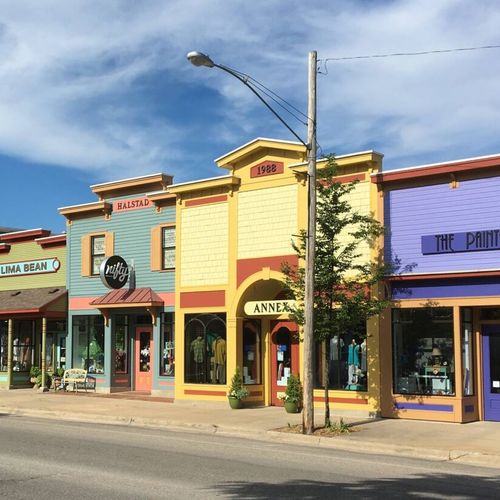
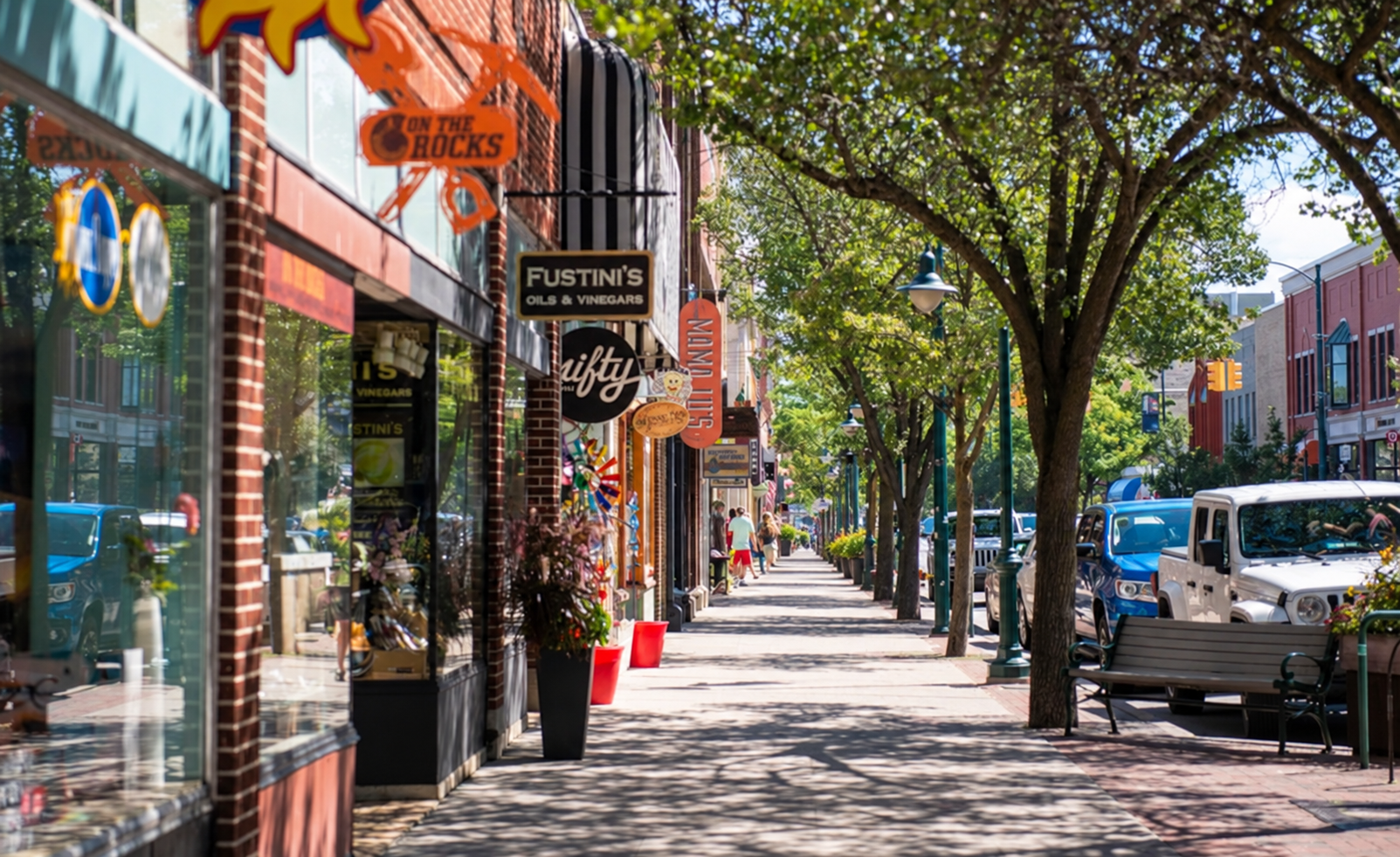
The scale is the point. You get a walkable downtown with independent restaurants, bookstores, and a historic opera house. You get two bays, dozens of inland lakes, and Sleeping Bear Dunes National Lakeshore within a short drive. You get wine country on both peninsulas, orchards, ski hills, and hundreds of miles of trails.
Most people who relocate here fall into a few groups:
- Remote and hybrid professionals who can keep a big-city salary and trade a commute for a bay view.
- Families looking for strong schools, outdoor childhoods, and a community where people still know their neighbors.
- Second-home owners who spent years summering here and finally decided to stay.
- Pre-retirees and retirees drawn by healthcare, culture, and a slower pace that never feels sleepy.
The region is also growing while much of Michigan is not. State projections show the Traverse City metro adding population through 2040, a meaningful contrast to statewide trends.
Where Traverse City Is and How You Get Here
Traverse City is about four hours from Detroit, five from Chicago, and two and a half from Grand Rapids by car. US-31 and M-72 are the main routes in.
The bigger story is the airport. Cherry Capital Airport (TVC) is a few minutes from downtown and is the third largest airport in Michigan. It served a record 935,816 passengers in 2025, up 19 percent over the previous record. Year-round nonstops connect to major hubs including Chicago O'Hare, Detroit, and Charlotte, with seasonal service that expands to roughly 20 nonstop destinations, including Florida in winter and East Coast and western cities in summer. A terminal expansion adding five new gates is underway.
For anyone flying for work or visiting family, this matters. Being one connection from almost anywhere is a large part of why Traverse City works as a full-time home and not only a summer one.
Traverse City Cost of Living and the Housing Market
Housing is the single biggest factor in the Traverse City cost of living, and it is higher than most of Michigan.
Home prices. The typical home in Traverse City now sells in the mid-$400,000s. Zillow placed the typical home value around $451,000 in mid-2026, and recent closed-sale medians have landed between roughly $450,000 and $475,000. Prices vary widely by location. Condos and homes in outlying townships can come in well below that. Walkable in-town neighborhoods, Old Mission Peninsula, and anything on the water sit well above it.
Market pace. Well-priced homes still move quickly, especially in spring and summer. Inventory is tight by national standards, and the best properties often draw multiple offers. At the same time, homes priced aggressively tend to sit and see reductions. Pricing and preparation matter more here than in a frenzied market.
Waterfront. Frontage on Grand Traverse Bay, Lake Michigan, or lakes like Long Lake, Elk Lake, and Torch Lake carries a significant premium and its own due diligence. Our guide to buying waterfront property in Northern Michigan covers it in depth.
Everyday costs. Groceries, dining, and services run close to national averages, with summer prices reflecting tourist season. Wages locally tend to trail larger Michigan metros, which is why remote workers and equity-rich buyers make up a large share of the relocation market.
Heating. Homes in the city typically have natural gas. Many rural and peninsula properties rely on propane, which costs more. Ask for a year of utility history on any home you are considering.
For current numbers, see our monthly Traverse City market report, updated with the latest closed sales, inventory, and days on market.
Traverse City Neighborhoods and Nearby Towns
Where you live shapes daily life here more than in most places. A ten-minute drive can take you from a downtown loft to a hilltop farm. These are the areas buyers ask about most.
Downtown and the Historic Neighborhoods
The Central Neighborhood, Boardman, Old Town, and Slabtown surround downtown with tree-lined streets, older homes with front porches, and easy walks to the beach, the library, and Front Street. Inventory is limited and demand is steady. Expect character, smaller lots, and premium pricing per square foot.
Grand Traverse Commons
The former state hospital grounds have been transformed into one of the most distinctive places to live in Michigan. Restored Victorian buildings hold condos, shops, restaurants, and a winery, surrounded by trails and the Commons Natural Area.
Old Mission Peninsula
A narrow ridge of farmland, vineyards, and orchards stretching about 17 miles into Grand Traverse Bay. Old Mission offers water views on both sides, a strong sense of community, and quick access to town. It is also more rural than people expect, with wells, septic, and limited commercial services. Our complete guide to living on Old Mission Peninsula goes deeper.
Leelanau County and Suttons Bay
West of town, the Leelanau Peninsula offers villages like Suttons Bay, Northport, Leland, and Glen Arbor, plus wineries, orchards, and Sleeping Bear Dunes. Suttons Bay has a walkable main street and a year-round community, about 20 minutes from downtown Traverse City.
Elk Rapids and Antrim County
Northeast along US-31, Elk Rapids is a harbor village with a marina, a small downtown, and access to the Chain of Lakes, including Elk Lake and Torch Lake. Buyers often find more space for their money here, with a drive of about 30 minutes into Traverse City.
East Bay, Acme, and Garfield Townships
These townships surround the city and hold much of the region's newer construction, family subdivisions, and practical commutes. They offer more square footage, newer homes, and convenient access to shopping, schools, and the airport.
Interlochen and the Southwest
Southwest of town, the area around Interlochen and the inland lakes offers wooded lots and lake homes at a lower price point, along with the world-renowned Interlochen Center for the Arts.
Weather and the Four Seasons
This is the question everyone asks, so here is the honest answer. Traverse City has real winters.
The National Weather Service puts Traverse City's full-season snowfall average at about 101 inches, and recent winters have run well above that. Lake-effect snow means totals can vary dramatically from one side of town to the other. January highs typically sit in the mid to upper 20s.
The tradeoff is that Lake Michigan moderates the extremes and gives the region its microclimate for cherries and wine grapes. Summers are the reward: warm days in the upper 70s to low 80s, cool nights, low humidity, and daylight past 9:30 p.m. in late June. Fall color across the peninsulas peaks in early to mid October and rivals anywhere in the country.
People who thrive here tend to embrace winter rather than endure it. Cross-country skiing at the Vasa Trail, downhill at nearby resorts, snowshoeing the dunes, and a full calendar of winter events make a real difference. Good snow tires and a reliable plow service are non-negotiable.
Jobs, the Economy, and Remote Work
Traverse City's economy rests on healthcare, tourism and hospitality, agriculture, education, and a growing base of small businesses, startups, and remote professionals.
Munson Healthcare is headquartered in Traverse City and is the largest employer north of US-10, with more than 5,500 employees. Other significant employers include Northwestern Michigan College, Traverse City Area Public Schools, local government, manufacturing, and the hospitality and wine industries.
Remote work has reshaped the market. A large share of recent buyers bring their jobs with them. Reliable broadband is widely available in town but can be inconsistent in rural areas, so confirm internet service before you fall in love with a hilltop property.
Schools and Education
Traverse City Area Public Schools (TCAPS) is the largest district in the region, with 16 schools including two comprehensive high schools, Traverse City Central and Traverse City West. Both rank well among Michigan high schools and offer extensive AP coursework, arts, and athletics. TCAPS also runs a public Montessori program.
Surrounding districts are a big part of the decision for many families. Elk Rapids, Suttons Bay, Glen Lake, Leland, and Northport all serve their communities with smaller class sizes, and Old Mission Peninsula has its own public charter school for younger grades.
Private and specialty options include St. Francis, The Greenspire School, and Interlochen Arts Academy, a nationally known boarding high school for the arts. Northwestern Michigan College offers associate and bachelor's programs, including the Great Lakes Maritime Academy, and partners with four-year universities for degree completion.
School boundaries do not always follow city lines, so verify the assigned district for any specific address.
Healthcare
For a region its size, Traverse City has exceptional healthcare. Munson Medical Center is a 442-bed regional referral hospital and the flagship of the Munson Healthcare system, which serves much of Northern Michigan. Specialty care spans cardiology, oncology, orthopedics, and neurosciences, and the system partners with larger institutions for complex care. For retirees and families alike, this is one of the strongest reasons Traverse City works year-round.
Things to Do Year-Round
- Beaches and water: Clinch Park, West End Beach, and Bryant Park in town, plus the beaches of Old Mission, Leelanau, and Sleeping Bear Dunes.
- Trails: The TART Trail network connects downtown to the Leelanau Trail and the Boardman Lake Loop. The Vasa Trail is a favorite for mountain biking and skiing.
- Wine and food: Dozens of wineries on Old Mission and Leelanau, a celebrated farm-to-table scene, cideries, and breweries.
- Culture: The City Opera House, the State Theatre, the Dennos Museum Center, and performances at Interlochen.
- Events: The National Cherry Festival in early July, plus winter festivals, farmers markets, and a steady calendar of community events.
- Winter sports: Downhill and cross-country skiing, snowshoeing, ice fishing, and sledding within easy reach.
Practical Details Before You Buy
These are the issues we walk relocating buyers through most often.
Michigan property taxes uncap at sale. Michigan caps annual increases in taxable value for existing owners. When a home sells, the taxable value resets toward current market value. The seller's tax bill is rarely what yours will be. Ask your agent to estimate post-sale taxes.
Primary residence vs. second home. Michigan's Principal Residence Exemption can significantly lower property taxes on a home you live in full-time. Second homes do not qualify, so the same house can carry very different tax bills depending on how you use it.
Short-term rental rules vary by township. Rules range from heavily restricted within Traverse City limits to outright prohibitions in some townships, and they continue to evolve. If rental income matters to your plan, verify the rules for the specific address before you write an offer.
Wells, septic, and propane. Outside the city, many homes rely on private wells and septic systems. Budget for inspections and testing.
Seasonal timing. Inventory and competition peak in spring and summer. Fall and winter often bring more motivated sellers and less competition, which can favor buyers ready to move.
Visit in winter. If you have only seen Traverse City in summer, come back in January before you commit. Most people who do still move. They just move with clear eyes.
Pros and Cons of Living in Traverse City
Pros
- Natural beauty in every direction: bays, lakes, dunes, vineyards, and forests
- A walkable, independent downtown with strong food, wine, and arts culture
- Excellent regional healthcare
- Strong public schools and a family-friendly community
- An airport with nonstop service to major hubs
- Four distinct seasons with real outdoor recreation in each
- A growing population and a resilient long-term housing market
Cons
- Housing costs well above the Michigan average
- Long, snowy winters that are not for everyone
- Summer traffic and tourist crowds
- Local wages that trail larger metros
- Limited inventory in the most desirable neighborhoods
- Fewer big-city amenities, such as major league sports and large shopping centers
Frequently Asked Questions About Moving to Traverse City
Is Traverse City a good place to live?
For people who value natural beauty, community, and outdoor life, Traverse City is one of the most desirable places to live in the Midwest. It offers strong healthcare, good schools, a walkable downtown, and four true seasons. The tradeoffs are higher housing costs and long winters.
How much does it cost to live in Traverse City?
Housing is the largest expense. The typical home sells in the mid-$400,000s, well above the Michigan average. Everyday costs like groceries and services are close to national averages.
How much snow does Traverse City get?
The National Weather Service puts the full-season average at about 101 inches, and recent winters have run higher. Lake-effect snow can make totals vary significantly across short distances.
What are the best neighborhoods in Traverse City?
It depends on lifestyle. The Central, Boardman, and Slabtown neighborhoods offer walkability. Old Mission Peninsula offers rural beauty and water views. East Bay and Garfield townships offer newer homes and space. Suttons Bay and Elk Rapids offer village life within a short drive.
Is Traverse City a good place to retire?
Yes, for many people. Munson Medical Center, a strong arts and culture scene, easy air travel, and an active outdoor community make it a popular retirement destination. Winter is the main consideration.
What is the job market like in Traverse City?
Healthcare, tourism, education, agriculture, and small business drive the local economy, with Munson Healthcare as the largest employer. Many new residents work remotely.
When is the best time to buy a home in Traverse City?
Spring and summer bring the most inventory and the most competition. Fall and winter often offer less competition and more motivated sellers.
Thinking About a Move to Traverse City?
Relocating is about more than finding a house. It is about finding the right corner of Northern Michigan for the way you want to live. The Ted Schweitzer Group helps buyers across Traverse City, Old Mission Peninsula, Leelanau, Suttons Bay, and Elk Rapids sort through neighborhoods, school districts, and the details that only show up once you live here.
If you are starting to plan, we are happy to be a resource. Reach out anytime with questions, or ask us for a custom neighborhood tour on your next visit.
Check out this article next